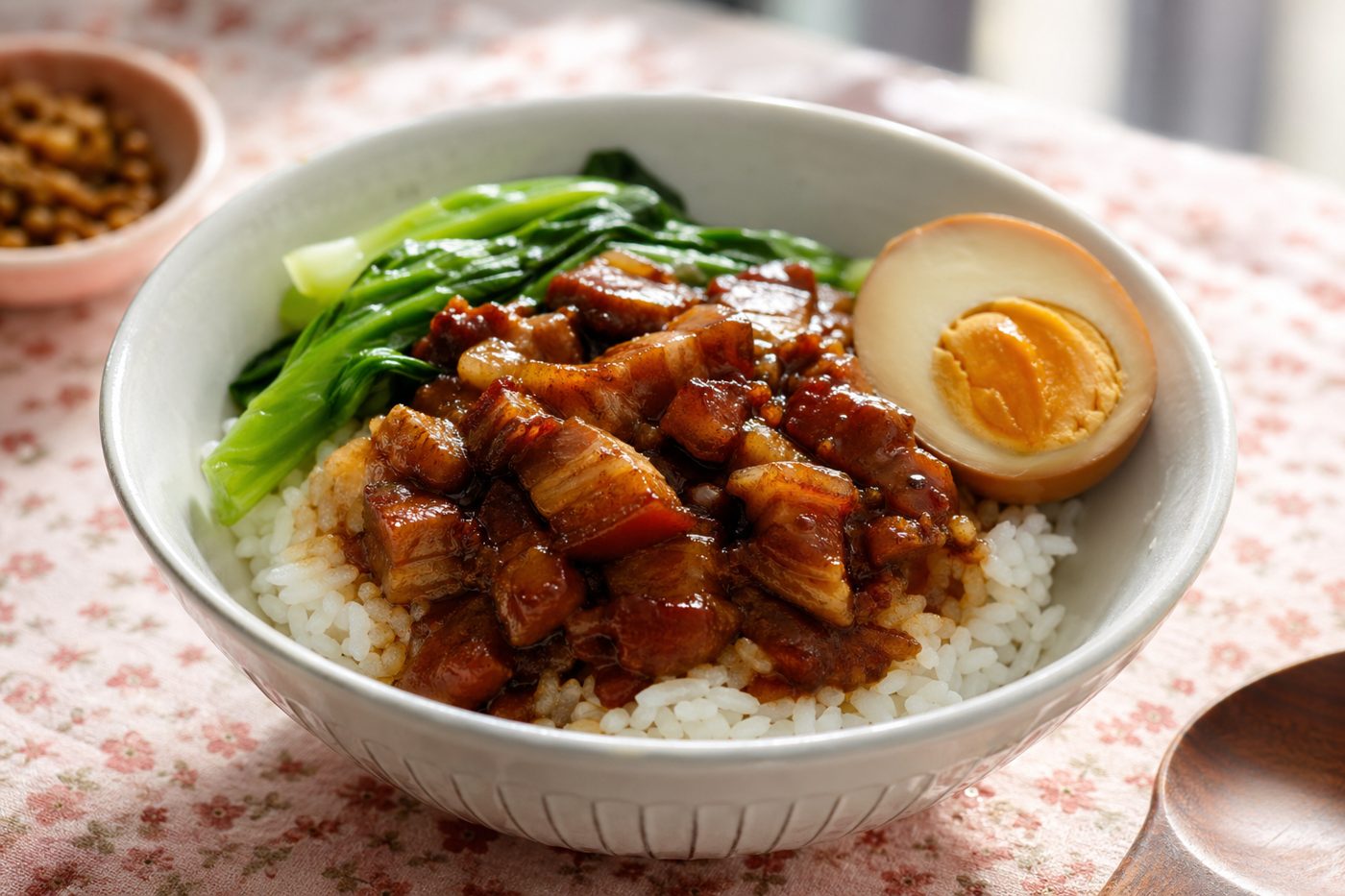
Overview
A batch-friendly braised pork dish designed for freezing and reheating. The focus is on building a reliable base that holds flavour over multiple meals, rather than something that’s only good fresh.
Ingredients (for ~3kg batch)
Meat
- ~3 kg pork (mix of pork belly and pork neck)
Note:
A mix of pork belly and pork neck tends to work well. Around 50/50 is a good starting point. You can lean more towards pork neck for a lighter result, or more pork belly for a richer one, but having some pork belly helps carry flavour and texture.
The meat is typically cut into rough rectangular strips (around 5–7 cm pieces) to keep prep simple and allow for better browning.
Aromatics
- ~500g shallots (sliced)
- ½–1 bulb garlic (minced)
- 2 thumb-sized pieces of ginger (minced)
Seasoning
- Light soy sauce (~150 ml)
- Shaoxing wine (~150 ml)
- Dark soy sauce (2–3 tbsp)
- Sugar (~1 tbsp)
- White pepper (1–2 tsp)
- Five spice powder (small pinch)
- MSG (optional, 1–2 tsp)
Optional
- Hard-boiled eggs
Browning
Browning the pork is an important step for building flavour.
- Cook over medium–high heat
- About 90 seconds to 2 minutes per side
- Turn once the surface develops light colour
The goal isn’t to cook the pork through, just to develop some browning on the surface. You’re looking for light colour, not crisping, and the meat should still be undercooked at this stage.
Aromatic Base
After browning, the rendered fat from the pork becomes the base for the next step — this is where a lot of the flavour is built.
That rendered fat is essentially liquid gold, and it’s used to cook the aromatics.
- Add shallots first
- Cook for a few minutes until softened and lightly browned
- Then add garlic and ginger
- Cook briefly until fragrant
If the pork hasn’t released much fat, a little additional oil can be added. Otherwise, the rendered fat is usually enough.
Braising (All-in-One Cooker)
Transfer everything into the cooker:
- browned pork
- aromatics
- rendered fat
Add:
- light soy, dark soy, Shaoxing wine
- sugar, white pepper, five spice, MSG
Then add water to around:
- half to three-quarters of the meat level
This keeps it as a braise rather than a stew and helps maintain a more concentrated sauce.
Cooking
- Slow cook on low for around 5 hours
By the end:
- the pork should be soft
- the fat should be rendered
- the sauce should be rich and cohesive
Texture Adjustment
After cooking, the meat can be broken down slightly depending on preference.
- Use tongs or scissors to separate into smaller pieces if desired
This helps the sauce coat the meat more evenly and makes it easier to eat with rice.
Final Adjustment
Taste and adjust at the end:
- Add more soy if it needs salt
- Add a bit more sugar if needed
- Add a splash of water if the sauce feels too intense
Storage & Reheating
This dish freezes very well.
- Portion once cooked and cooled
- Freeze for later use
When ready to eat:
- Defrost in the fridge ~24 hours in advance
- Reheat using the all-in-one cooker reheat function (or gently on the stovetop)
Serving & Reheat Upgrades
Serve with rice and simple additions to balance the richness:
- Pickled vegetables (e.g. kencai-style preserved veg)
- Lao Gan Ma
- Boiled eggs (see separate guide: preparing soy eggs)
- Blanched or stir-fried leafy greens
These additions help bring back contrast and keep the dish from feeling too heavy across multiple meals.