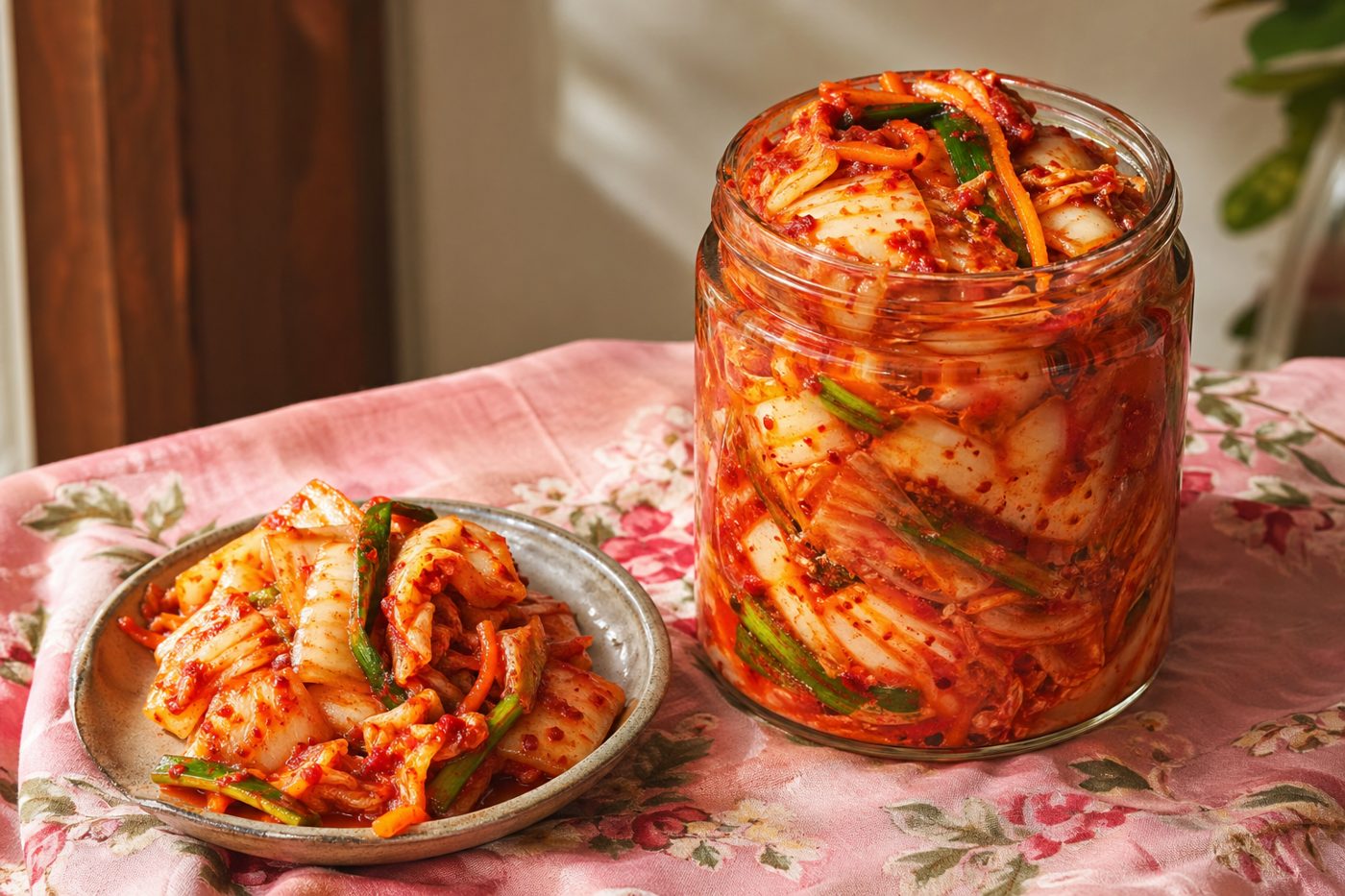
Sour Stuff)
Overview
Where I live, I can buy kimchi from an Asian grocer.
It’s expensive as shit.
And when you try it, it’s usually overly sour, not very savoury, and just… disappointing.
That’s not really the kind of kimchi I like.
A lot of store-bought kimchi ends up like this because of how it’s processed and stored—it’s pushed further into that sour stage so it lasts longer on shelves.
What I prefer is something different:
- more spicy
- more savoury
- deeper flavour
- still tangy, but not aggressively sour
Bright red, punchy, and something you actually want to keep eating.
Ingredients
Main
- 2 Chinese (napa) cabbages
- Spring onions (optional)
- Carrots (julienned, optional)
Kimchi Paste
- Gochugaru (~10 tbsp)
- Garlic (½ bulb)
- Ginger (1–2 thumb-sized pieces)
- Pear or apple (1, grated or blended)
- Fish sauce (3–4 tbsp)
- Shrimp paste (1–2 tsp)
- Sugar (1–2 tbsp)
Step 1 — Brine the Cabbage
- Cut cabbage into large pieces
- Place into a large pot
- Add enough water to cover
- Add a generous amount of salt
You’re aiming for water that tastes clearly salty.
Traditional methods often keep the cabbage whole and salt between the layers. This works, but cutting into pieces and brining in salted water is much easier to manage.
- Leave to brine for 4–6 hours
After:
- Rinse lightly
- Drain well
- Let it sit for 30–60 minutes to remove excess water
Step 2 — Make the Paste
Prepare:
- Garlic, ginger, and pear/apple
- Mince, chop, or blend
Then combine with:
- Gochugaru
- Fish sauce
- Shrimp paste
- Sugar
You can add a bit of water to help bring it together.
You’re aiming for:
- thick
- red
- punchy
Step 3 — Mix
- Combine cabbage with the paste
- Add spring onions and carrots (if using)
Use gloves if you can—this stuff stains and lingers.
Mix thoroughly so everything is coated.
Taste it:
- not spicy enough → add more gochugaru
- too salty → adjust next time
Step 4 — Ferment
- Transfer into jars or containers
- Press down so everything is compact
Leave at room temperature:
- ~2 days if around 20°C
Adjust based on temperature:
- Warmer → faster fermentation
- Cooler → slower fermentation
If you know a bit about how bacteria work, you’ll know they grow faster in warmer conditions—which is why fermentation time changes depending on temperature.
After fermenting:
- Taste it
- Move to fridge when it’s where you want it
Step 5 — Store & Eat
- Store in the fridge
- Keeps well for at least 2 weeks
Realistically, it can last much longer.
Flavour will continue to develop and become more sour over time.
How to Use
Works well with:
- Japanese curry (see recipe)
- Kimchi fried rice (see recipe)
- Kimchi stew (see recipe)
Next up, we build:
- Kimchi fried rice
- Kimchi stew (jjigae)
Those complete your kimchi loop and make this ingredient actually useful day-to-day.